Chinese New Year is a very grand occasion for the Chinese all over the world. Here is an account of some of the beliefs practised by many but with modernization, many of these practices are no longer followed.
Chinese New Year Eve usually is on 30th lunar day of 12th lunar month. However, a lunar month might have only 29 days. In this case, the Chinese New Year Eve becomes on 29th day of 12th lunar month. The next day will be a new moon day, which is the Chinese New Year Day.
In Chinese, Chinese New Year Eve is called Chu-Xi or Guo-Nian . Chu means removal. Xi means night. Guo means passing. Nian means year.
The original meaning of Nian is related to afarmer's harvest. Chinese farmers celebrate their harvest for the past year, they appreciate the gracious reward given from the gods, and prayed for the same luck for the coming year.
Nobody knows when the legendary story about Nian began. Nian was a ferocious and carnivorous beast. It had lion-type head with elephant-type body. As the legend goes, Nian couldn't find its food in the cold winter months because many animals were hibernating in the mountains. So Nian was forced to go down from the mountain to the lowlands where the villages were to look for livestock. Later, Nian became a man-eater.
Nian was very strong and took many innocent lives. Every winter night, the villages stayed inside their houses to protect themselves from this ferocious animal. With time, the villages found that Nian was afraid of red, fire and noisy sounds. Hence the villages cut red-color peach wood to hang on the doors, and made a campfire in the front of the main door as well. When Nian approached the villages, the people put the bamboo into an open fire and burn them to make a loud cracking sound. They also beat the metal kitchen and farming utensils to make noisy sound to scare Nian away.
The villages survived the long ordeal, celebrated and congratulated each other. They felt like a restarting anew, a new chapter to mark the passing of the disaster. And so, they called Guo-Nian (passing Nian) the day before the new starting day.
House cleaning should be ready on or before the day Chinese New Year eve. But most Chinese families are still very busy on this day doing last minute preparations. Early morning, someone has to go to the flower-market to buy flowers for worship events and new year day decorations. Red is the auspicious color in China. The pink peach flowesr and Japanese sakura are very popular choices for the flower arrangement.
The first event on Chinese New Year Eve is to worship the Jade Emperor with flowers and fruits without animal sacrifices (top ranking gods are vegetarian). This is normally done in the early morning to give thanks for the gracious protection from the god of heaven in the past year and pray for safety, harmonious and good fortune for the coming year.
Many families probably would still be working on the final decoration of their homes. They will decorate the doors and windows. Chinese calligraphers write New Year's poetry on the red color paper and it is customary for people to paste them on the top and both of sides of main-entry door. They believe this custom comes from the story of man-eater Nian animal, which was afraid of red color. There are occasions where people drew The God of the Door images on red-color peach tree wooden blocks and hang them on the door to scare the devil spirit away. Later, the Chinese use red color paper instead. There is a even simpler way is to write a single character on the diamond-shape red paper and paste on the doors, windows, containers, posts, storages and money safety boxes. The popular characters are Spring, Luck, Full, Money, Happiness, Wealth, Safety or Prosperity. Some are posted upside down, because the sound of upside-down in Chinese is similar to the word of come. So the upside-down MONEY poster means money comes. The upside-down LUCK poster means the luck comes.

Long ago, the Chinese paste the New Year paper-cutting arts on the windows. It's hard to find people doing this today, because it required experience, skill and lots of patience to create those art works. It's also time-consuming to put the arts on the windows.
In the afternoon around 2 or 3 P.M., Chinese would say good-bye to the current year by serving the gods and ancestors at their family Buddhist altar with
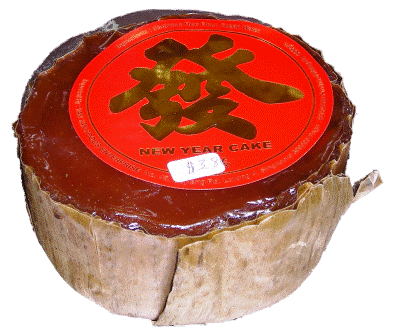
Nian-Gao (sweet rice cake, picture below), Fa-Gao (steamed rice cake), animal sacrifices (pork, duck, chicken or fish), fruit, drink, candy with big red candles. Long ago, one important and special item is to put a hundred of coins tied with red thread with the hope for good luck and longevity to 100 years. Today, people put cash as much as you can instead.
After saying goodbye to gods and ancestors, women begin to prepare the reunion dinner. The main dish sitting on the center of the table is Hot-Pot. The traditional Hot-Pot is a big metal (alumni) bowel and has a hollow tube in the center. Chinese put hot bone soup in the bowel and cook different kind of sliced meat, seafood, vegetable, meat balls and seafood balls during the dinner. They put hot-rock or hot-coal inside the hollow tube to keep food warm. So they can eat the reunion dinner each for hours.
Chinese New Year day usually is close to spring, but it's very often that the weather is still cold. In ancient China, in order to eat the warm food, Chinese had to sit around the cooking stove for New Year Eve dinner. That's why this dinner is also called Wei-Lu , which means "surrounding the stove".
There are many dishes on the dinner table. Every dish has an auspicious meaning behind it. It's connected to longevity, reunion, perfection, good luck, health, diligence, satisfaction or promotion based on the homophone of the dish's name. Family members are supposed to have some from every dish. So they can eat and chat for longer time and share love and care during this time. However, Chinese don't touch fish on the table. This is because the homophone of fish is remainder, which means they have surplus or extra saving in the end of the year. In the other hand, they need leftover for Chinese New Year Day - nobody cooks at home.

After dinner, that's a exciting time for the children. They are waiting for New Year's Hong Bao , which is a Red Envelope containing the brand-new money. Adult or parents will hand out the Red Envelopes to children, unmarried immediate family and their parents before going to the bed. Children will put all Red Envelopes under the pillow when sleeping. They said children can sleep well without bad dream and become richer next year. The family expense increase sharply during Chinese New Year period. Usually, Chinese receive year-end bonus about one or two month salary pay. (The lucky one can even have one year salary) from the company before Chinese New Year holiday. Therefore most family can afford a better food, clothing and decoration for Chinese New Year. Banks will prepare many brand new bills for people to exchange. That's why all the lucky money in the Red Envelope are brand-new.

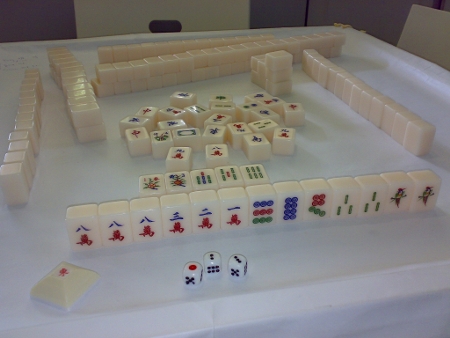
The last event is the vigil to wait for new year coming. One main reason is this can extend parents lifespan. The sound of Sleepiness in Chinese is similar to Trouble. Sleepless means no trouble for the coming year. How can Chinese keep them awake? It's simple. They watch TV shows for Chinese New Year special. The other way is gambling - playing Mah-Jong. It's required lots of skill, memorization, calculation, strategy and luck to win the money. Since the fully concentration, you will feel the time pass quickly. Usually, they will play Mah-Jong all night long, because the loser wouldn't quit.
Many people will gather outside the temple after reunion dinner, everyone wants to be the first person of the year to be blessed by the God. There is the first incense stick race at many temples every year. One the first second of Rat hour, 11 P.M., as soon as the temple's main gate is opened, people will dash into the temple to insert the incense stick into the incense container. The winner will win a big Red-Envelope from the temple. But the most important thing is the winner will be very lucky in the coming year.
After receiving the Red Envelopes, young people like to go outside for the vigil of the year. Before midnight, they gather with friends or relatives around park, riverside or tall buildings to wait for the Chinese New Year fireworks.